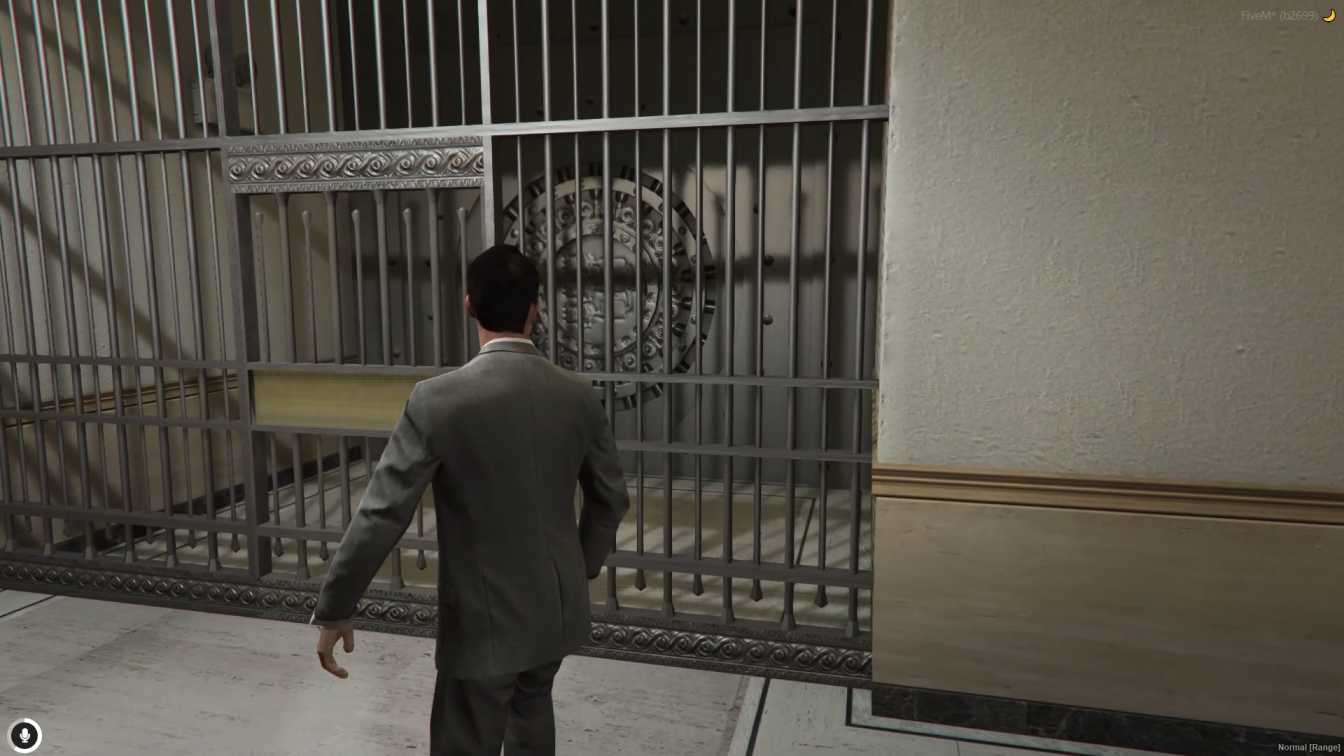
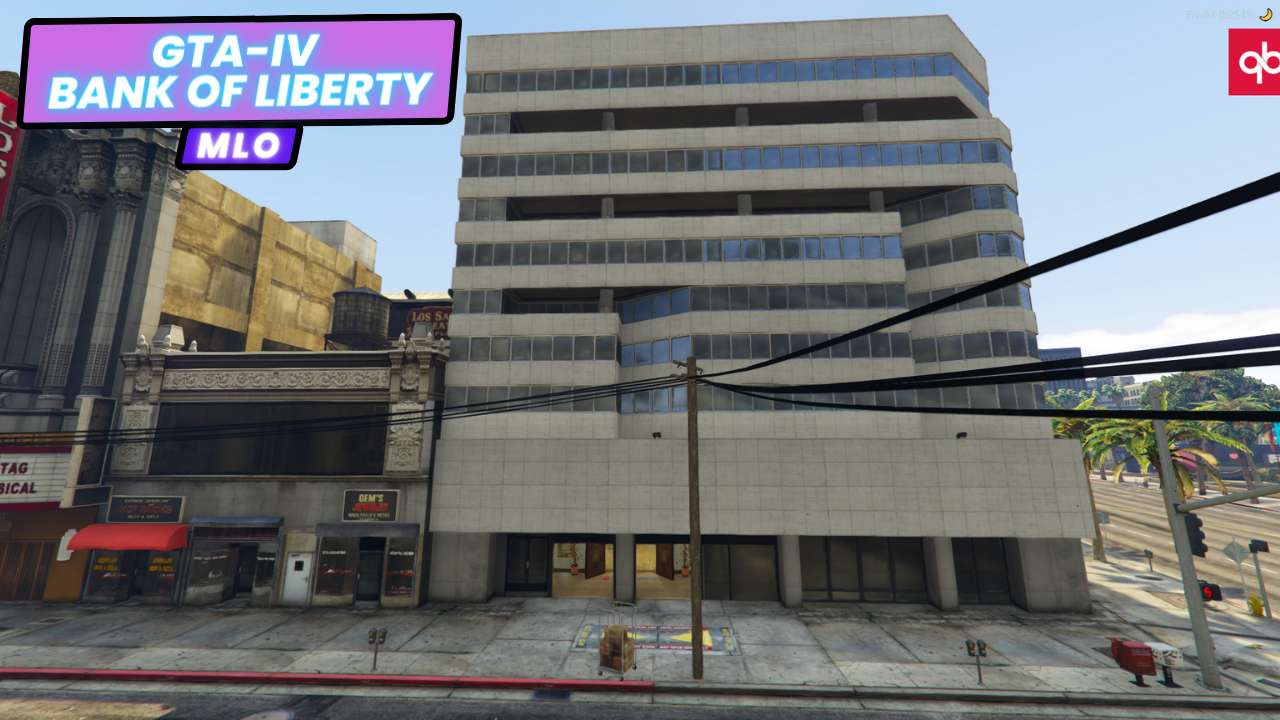
Design a FiveM bank robbery route with clear phases, balanced sightlines, server-authoritative rewards, police response, and reliable reset behavior.

A bank robbery should create decisions for criminals, police, dispatch, and negotiators—not a memorized sprint between glowing circles. The MLO determines sightlines, access, and escape possibilities, while scripts determine requirements, timing, rewards, and state. Design both together or the encounter will favor whichever side the map accidentally helps.
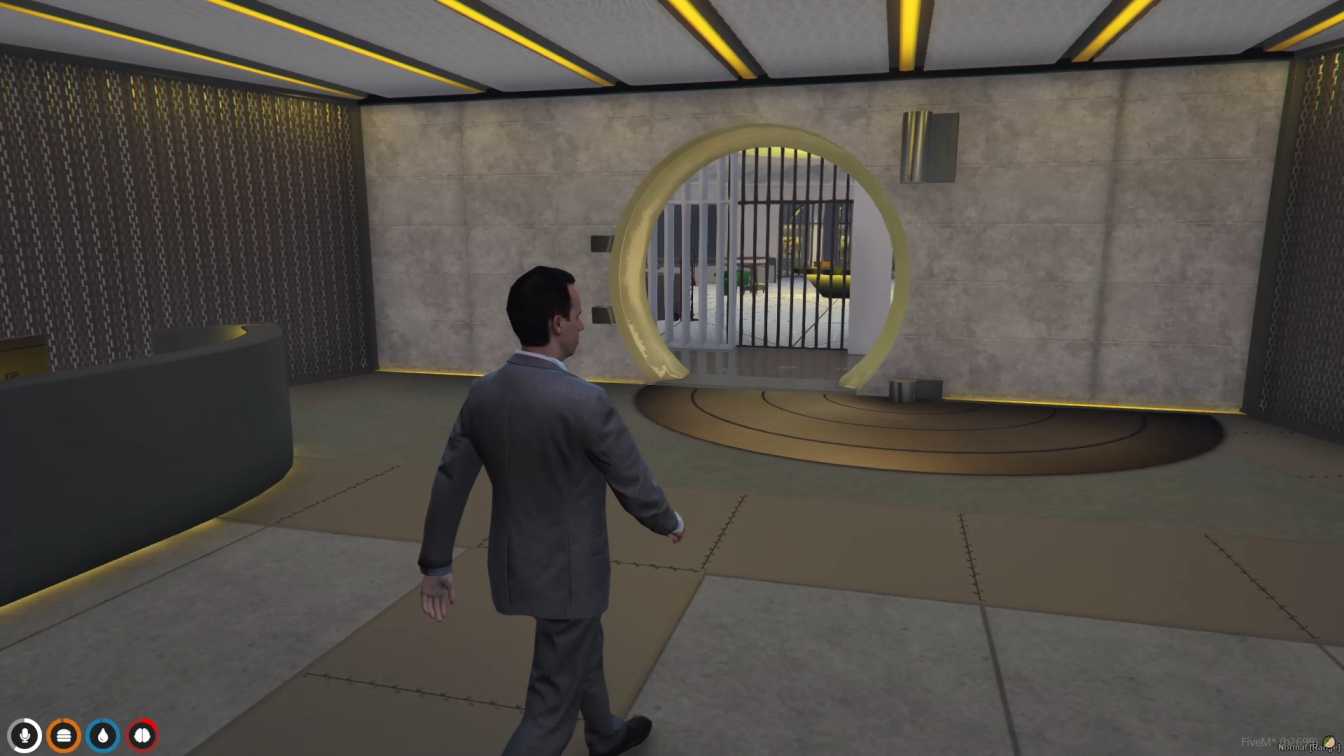
Use the image to examine route geometry; verify the delivered layout and dependencies before building robbery logic.
Write the robbery as a state machine: unavailable, preparation, breach, active robbery, police response, escape, cooldown, and reset. For every phase define who can act, which doors or targets change, what is persisted, and how the system recovers after a restart. A single `robberyActive` boolean rarely describes hostages, partially breached doors, collected rewards, or abandoned scenes well enough.
Map three routes. The criminal route covers entry, control point, security breach, vault or deposit targets, and escape. The police route covers dispatch arrival, perimeter, observation, negotiation, breach, and evidence collection. The civilian route covers normal banking, evacuation, and safe exits. Avoid a layout where police must enter through the criminal escape path or where normal visitors can unknowingly walk into an active vault interaction.
Compare bank interiors through FiveM map categories, and inspect a concrete layout such as the Pacific Bank MLO. Select for encounter geometry, not only vault detail.
Install the map in staging and test all collision, doors, roof access, vents, elevators, and nearby alleys without the robbery script. Draw a simple route diagram and label every networked door or target. Then implement one vertical slice: prerequisites, first breach, alarm, dispatch call, one reward container, evidence, cooldown, and full reset.
Validate inventory, police count, distance, cooldown, and current phase on the server. The client may show minigames, but it should not choose reward value or declare success. Lock each reward target atomically so two players cannot collect it together. Give the incident a unique identifier used by dispatch, logs, evidence, and payout records.
Tune timing from roleplay goals. Preparation should create risk, not idle staring. Police response time should reflect travel and staffing, not an arbitrary timer copied from another map. Rewards should account for required items, failure probability, evidence risk, and the wider banking and economy design. Connect alerts using the dispatch setup guide.
Set a minimum police count only if those officers can realistically respond; an on-duty count that includes unavailable officers creates false confidence. Consider a dispatch acceptance signal or a short grace process, but never expose officer locations to criminals.
Use several escape possibilities with visible trade-offs: a fast public exit, a slower service route, or a vehicle-dependent plan. Avoid guaranteed tunnels. Evidence, marked currency, damaged tools, and witness statements can create consequences after the chase without forcing an arrest during the robbery.
Run tabletop tests before tuning payouts. Give one tester the criminal plan, another the police response plan, and a third the reset checklist. Rehearse a quiet breach, an alarm during preparation, a hostage negotiation, a failed minigame, a robber disconnect, and a server resource restart while the vault is open. Record which incident state, doors, rewards, evidence, and dispatch markers remain after each interruption.
Use those rehearsals to define recovery deadlines. An abandoned preparation may clear quickly, while a breached vault may retain evidence and a longer cooldown. If police never acknowledge the call, decide whether criminals may continue, whether difficulty changes, or whether the event cancels without consuming rare tools. Make that policy visible rather than improvising it during a live scene.
For final approval, compare candidates with the same scenario and player counts. Score response visibility, negotiation space, breach alternatives, escape readability, reset completeness, and street disruption. A bank that looks dramatic but requires staff to repair door state after every second attempt is more expensive operationally than a simpler layout with repeatable recovery.
The vault can be looted twice. Use server-side per-incident target locks and a durable completion record. Client cooldowns are not sufficient.
Doors desynchronize. Assign one door-state owner, broadcast state to late joiners, and test resource restart during every phase. Do not let a map script and door-lock script both animate the same object.
Police receive no alert or several alerts. Emit one incident event with an idempotency key, then let dispatch update it. Check repeated handlers after resource restart.
Players trigger targets through floors or walls. Validate coordinates, entity, phase, and server-side distance. Separate vertical zones carefully.
The reset leaves props, locked doors, or cooldown errors. Write reset as an explicit, repeatable operation and test success, failure, abandonment, disconnect, and restart paths.
The scene causes streaming problems. Reproduce under realistic load and use the MLO texture-loss guide.
A fair robbery is not symmetrical; each side has different tools. It is fair when routes are understandable, state is reliable, and decisions—not invisible triggers—shape the result.
Written by
xFiveM Shop Editorial TeamResearch-led FiveM guides with disclosed review and update standards

 FiveM
FiveM