Choose a FiveM restaurant MLO and connect employee duties, recipes, inventory, ordering, payments, and society revenue into a balanced business loop.

A restaurant becomes useful roleplay content when employees can turn supplies into service and service into a balanced business. An interior full of counters and tables is only the stage. The durable loop connects deliveries, storage, preparation, recipes, orders, payment, wages, and cleanup in a way customers can understand. This guide covers choosing a restaurant MLO and integrating that loop without creating an unlimited-money crafting station.
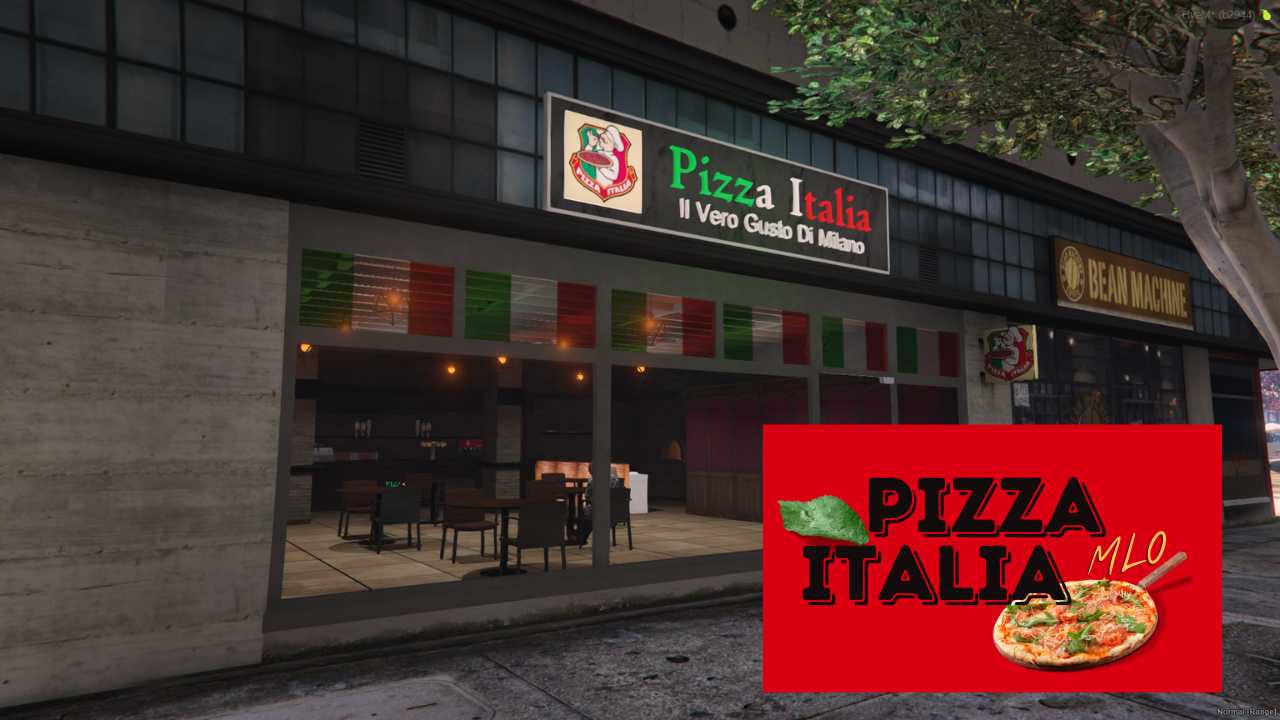
Use the image to assess front-of-house and back-of-house separation; verify the package contents and framework support before deployment.
Choose what kind of experience the restaurant offers. Is it fast counter service, table service, a social venue, or a production business supplying other locations? That decision changes the required layout and script behavior. Counter service needs a visible queue and rapid order handoff. Table service needs room for staff circulation and an order system that identifies tables. A production kitchen needs delivery access and storage controls.
Write the smallest complete loop: employee clocks in, obtains ingredients, prepares one menu item, takes an order, delivers it, accepts payment, and returns revenue to the intended account. Add complexity only when this loop is stable. Players notice a reliable three-step recipe more positively than a twenty-item menu where half the targets fail.
Use restaurant and café categories to compare styles, and inspect the Pizza Italia restaurant MLO for a concrete layout reference. Keep product facts on the listing; use this planning process to decide whether the space supports your chosen service model.
Look beyond table count:
Confirm whether branded assets fit your community rules and theme. Ask whether chairs are usable, doors need external configuration, and kitchen props align with common target positions. A visually complete kitchen may still lack clear interaction space.
Install the MLO in staging, verify collision and door access, then mark every candidate interaction with temporary debug zones. Walk the customer and employee paths with several players before finalizing coordinates. Remove zones that exist only because a prop is present; every interaction should serve the business loop.
Create a small recipe model. For each item document ingredients, output quantity, preparation time, station, sale value, and any status effect. Work backward from the sale price: ingredient cost, labor opportunity, spoilage or loss, and society margin should make sense together. Avoid recipes where free water plus one cheap item becomes the server's dominant income source.
Make inventory changes server-authoritative. Validate employee role, duty state, proximity, recipe, and ingredient quantities before producing an item. Use bounded batch sizes and cooldowns where automation could be abused. If animations are interrupted, define whether ingredients are consumed at the start, completion, or in a recoverable transaction.
Then connect orders and payment. Decide whether customers pay the employee, a register, or an invoice. Pick one revenue event. Split tips, wages, and society income explicitly rather than relying on several resources to infer them. The whole-server economy guide helps compare restaurant earnings with other legal work, and the Jobs Creator can help structure supported framework job definitions.
Restaurants often alternate between busy and empty. Decide what happens when no employee is online. Options include no service, a limited vending menu, or NPC takeout at a higher price. A fallback should not make staffed service irrelevant. Display availability clearly so customers do not wait at a dead register.
Grade permissions should map to responsibilities. New staff may prepare basics and use a register; chefs unlock advanced recipes; managers set limited discounts, order stock, and access reports. Keep management withdrawals separate from routine till operations. Log exceptional refunds and price overrides.
Plan restocking as a playable but reasonable task. Deliveries can connect the restaurant to logistics players, but excessive box handling becomes busywork. Use reorder thresholds and package sizes that produce occasional coordination rather than constant interruption.
Craft targets overlap or the wrong recipe opens. Shrink zones, give stations unique identifiers, and verify registration after resource restarts. Do not stack several broad box zones around adjacent props.
Ingredients disappear when crafting is cancelled. Review when consumption occurs and whether the progress system reports cancellation reliably. Prefer a server-controlled completion path and document non-refundable stages.
Society money increases twice. Check register, invoice, and job scripts for duplicate deposits. A paid order needs one immutable reference so retries return the existing result instead of depositing again.
Customers cannot find staff or ordering. Improve signs, lighting, menu placement, or a simple interaction prompt. Do not solve unclear architecture with a larger marker visible through walls.
Employees can craft from anywhere. Validate server-side distance and duty state; client target zones are interface conveniences, not security boundaries.
The restaurant is smooth alone but causes city texture issues. Re-test after loading several interiors and follow the MLO texture-loss optimization guide to identify aggregate pressure.
The strongest restaurant loop is easy to read and hard to exploit. Select a layout that supports the service style, launch with a focused menu, and tune the economy from observed behavior rather than adding complexity for its own sake.
Written by
xFiveM Shop Editorial TeamResearch-led FiveM guides with disclosed review and update standards

 FiveM
FiveM