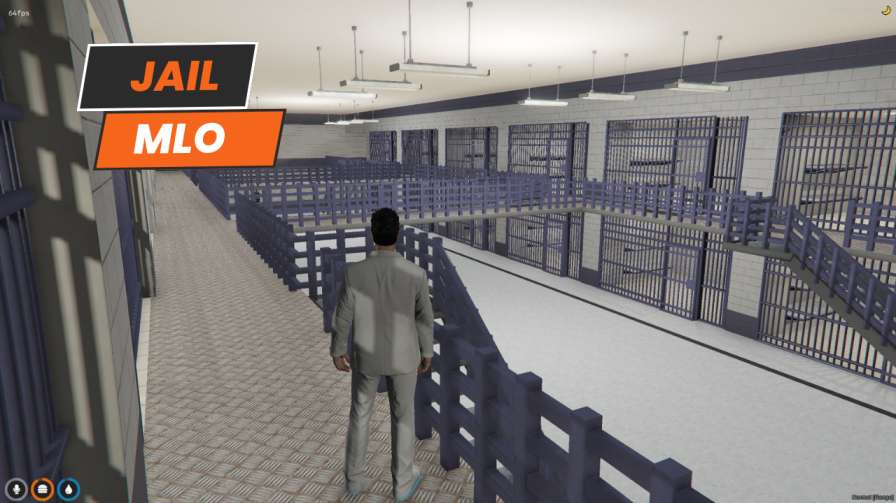
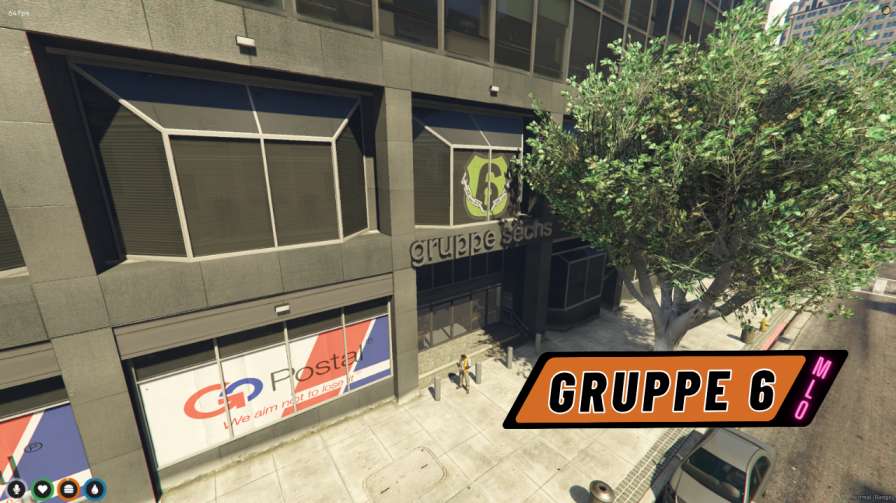
Connect a FiveM prison MLO to custody state, intake, activities, property storage, corrections access, reconnect handling, and reliable release.

Prison roleplay needs more than a teleport and a countdown. A good jail experience moves a player through intake, sentence activities, social space, incidents, and release while giving corrections staff useful work. The MLO provides geography; the jail system owns custody state. Connecting them carefully prevents lost sentences, trapped players, and escape routes that exist only because two resources disagree.
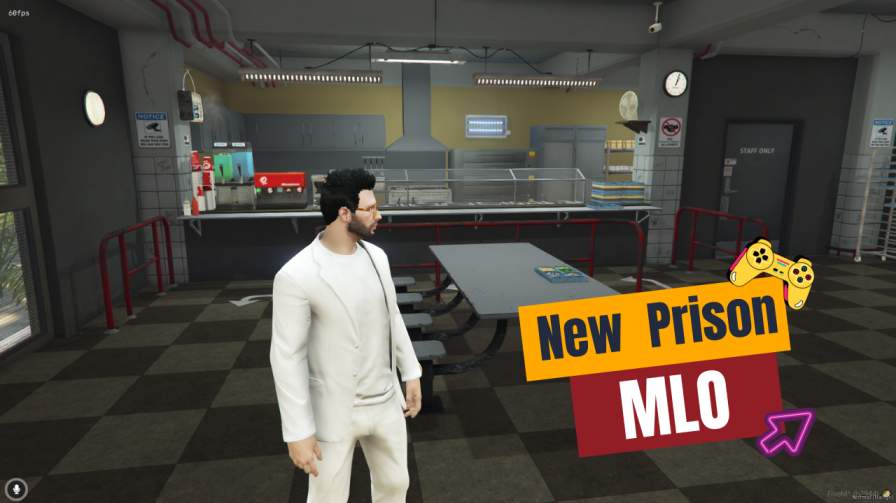
Use the image to consider zones and supervision; confirm the package layout and technical requirements before setup.
Model arrest transport, intake, assigned custody, activity, medical transfer, temporary isolation, escape, release, and offline custody. Store the authoritative sentence and status server-side. Decide whether time advances offline, only online, or through completed activities; communicate that rule clearly. A client timer should display state, not own it.
Map the route from sally port to search, property storage, clothing, cell assignment, common areas, visitation, medical, and release. Staff and visitors need separate circulation. An escape route can create content, but it should be deliberately integrated with alarms and pursuit rather than left as an unguarded decorative door.
Compare correctional locations through FiveM MLO categories and review the New Prison MLO as a layout reference.
Install and inspect the MLO alone. Test every gate, staircase, roof, fence, tunnel, elevator, and collision edge from both sides. Create a zone register containing purpose, access rule, coordinates, and resource owner. Configure intake and release first, then one cell block and one activity.
Build an idempotent jail command or server function. It should accept a validated player, sentence, reason, and case reference; preserve required inventory according to policy; set custody state; and place the player at intake. Repeating the same case request must not double the sentence or erase property twice. Release should return property once, clear state, update records, and place the player at a safe public exit.
Connect police records through the dispatch and MDT guide. Use narrow access rules from the ACE permissions guide for technical overrides, separate from correctional job permissions.
Activities should offer choices rather than a single optimal grind. Cleaning, kitchen work, exercise, education, visitation, and legal meetings can reduce monotony; sentence reductions should be capped and server-validated. Keep contraband and escape systems proportional to staff availability.
Create a test matrix around the sentence record, not just the prison location. Begin with intake and interrupt the flow after property removal, after clothing changes, during cell placement, and immediately before confirmation. On each retry, verify that the same case reference resumes safely, property is neither copied nor lost, and sentence time is not added twice. Repeat with an officer disconnecting halfway through intake.
Test planned transfers as well. A hospitalized inmate should retain custody status while receiving a temporary medical destination, and returning them should not create a second sentence. Court transport, visitation, and administrative isolation need similarly explicit temporary states. If routing buckets are used, confirm voice, restraints, escorts, and door controls behave when staff and inmates cross between instances.
Recovery drills should include a prison-resource restart with inmates in cells, activities, medical, visitation, and an escape state. After initialization, reconstruct only safe temporary data and reload durable custody from the server. Decide what happens when a configured cell or activity no longer exists after an update: send the player to a known intake fallback, preserve remaining time, and log the repair rather than releasing or trapping them.
Before launch, rehearse a mass intake and mass release at expected peak population. Observe queue space, clothing and inventory operations, target overlap, gate synchronization, transport congestion, and database timing. Corrections staff should have a short runbook for stalled intake, missing property, blocked gates, medical transfer, and release verification, with every override linked to an operator and case reference.
A reconnect frees or permanently traps a player. Restore custody from authoritative server data on character load, after the framework has selected the correct character. Test reconnect in every custody state.
Property duplicates or disappears. Give intake storage and return operations transaction identifiers. Separate evidence seizure from temporary inmate property.
Sentence time runs at different speeds. Use server timestamps or explicit server ticks and one policy for offline time. Never trust client elapsed time.
Gates desynchronize. Choose one door owner, synchronize late joiners, and test a door-resource restart. Provide a logged emergency control.
Activities work outside prison. Validate custody state, zone, cooldown, and task sequence server-side.
Release puts players inside a locked perimeter. Test the exact release coordinate after all doors and IPLs load, including after restart.
A prison system should preserve continuity while giving players meaningful choices. Reliable custody state and clear routes matter more than a long sentence timer or a huge unused facility.
Written by
xFiveM Shop Editorial TeamResearch-led FiveM guides with disclosed review and update standards

 FiveM
FiveM